
Aurela
Augmented reality for medical teaching and training.
Aurela automatically turns CT and MRI datasets into interactive 3D models that learners can view, rotate and discuss together in space.
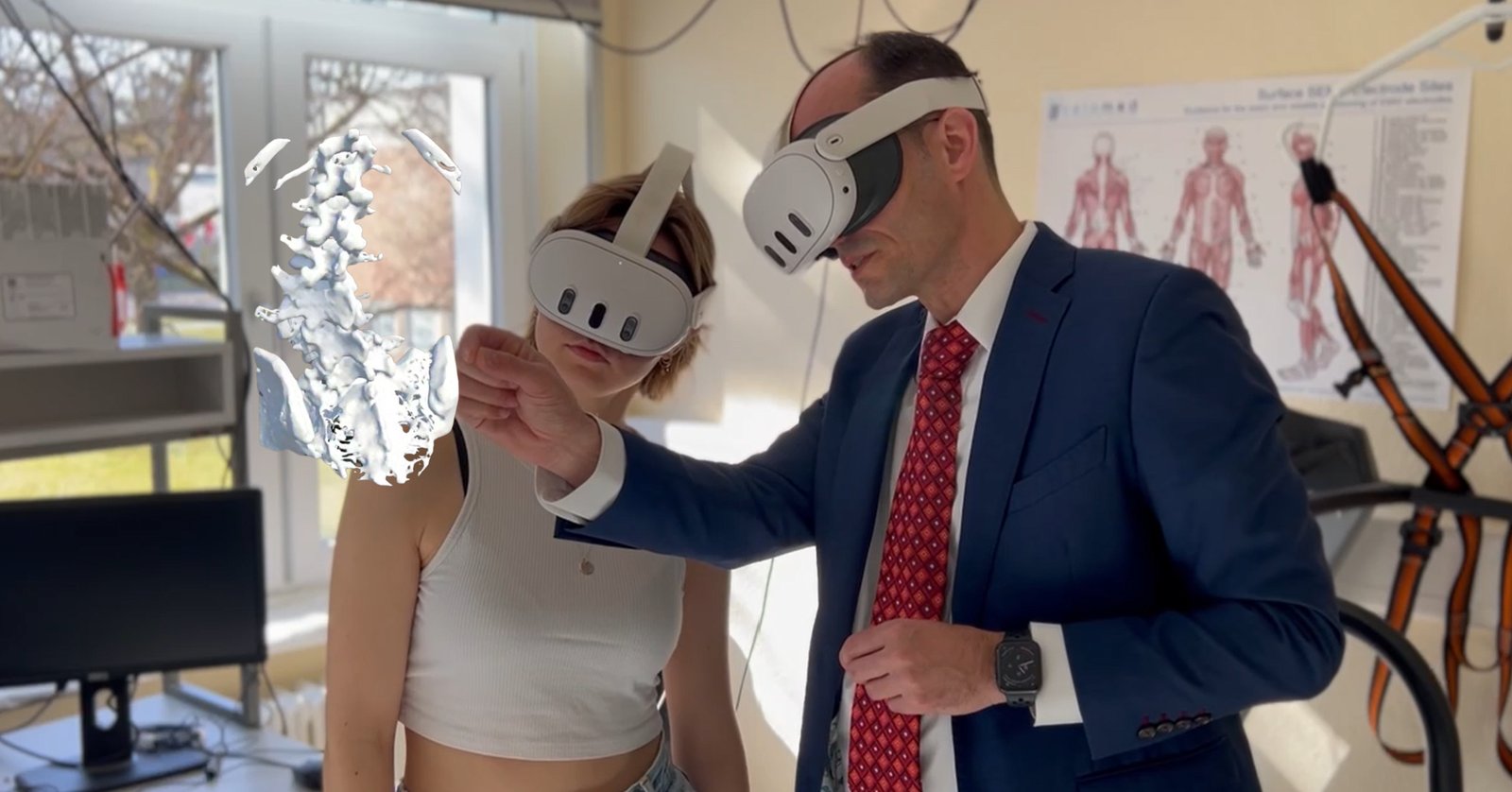
Understanding anatomy without seeing it in 3D
Students, trainees and physicians in residency work with complex CT and MRI datasets every day, displayed on two-dimensional monitors. This makes spatial structures harder to grasp and often leaves the teaching of anatomical relationships abstract. Especially in complex cases, such as spinal procedures or pelvic fractures, there is no tool that makes real data intuitively accessible.
Real data, right in the headset
Aurela is an automated augmented reality system that turns medical imaging data into interactive 3D models. The models are viewed in the headset, rotated, enlarged and discussed together.
- Intuitive hand-tracking control, no controllers needed.
- Shared Classroom mode: multiple students learn together on the same 3D model.
- Real data instead of generic models.
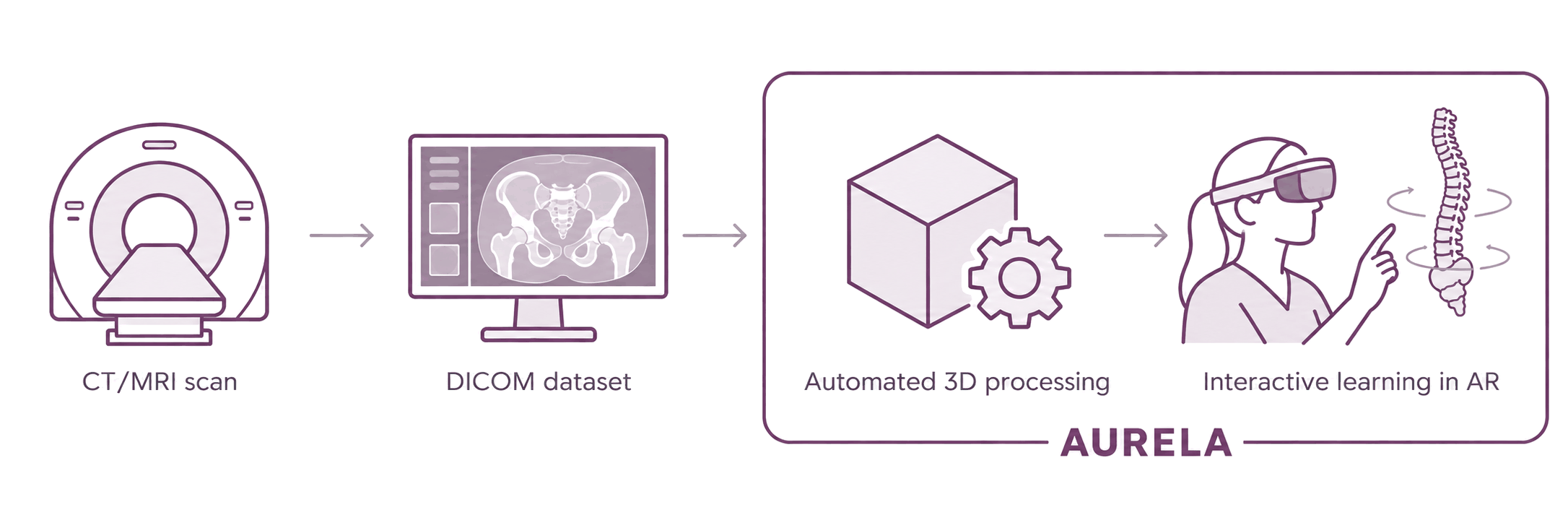
From CT scan to explorable 3D anatomy
In just a few automated steps, existing imaging data is processed and visualised in the AR headset.
Who Aurela is designed for
From training laypeople to students and physicians in residency: Aurela makes medical imaging data tangible for every learner.
-
01
Laypeople
Convey anatomical fundamentals clearly, no medical background required.
-
02
Students & trainees
Grasp complex anatomy spatially and understand how cross-sectional images relate to 3D structures.
-
03
Physicians in residency
Deepen expertise using real datasets, together in Shared Classroom mode.
Interested in working together?
We look forward to connecting with university hospitals, educational institutions and partners who want to help shape digital medical education.